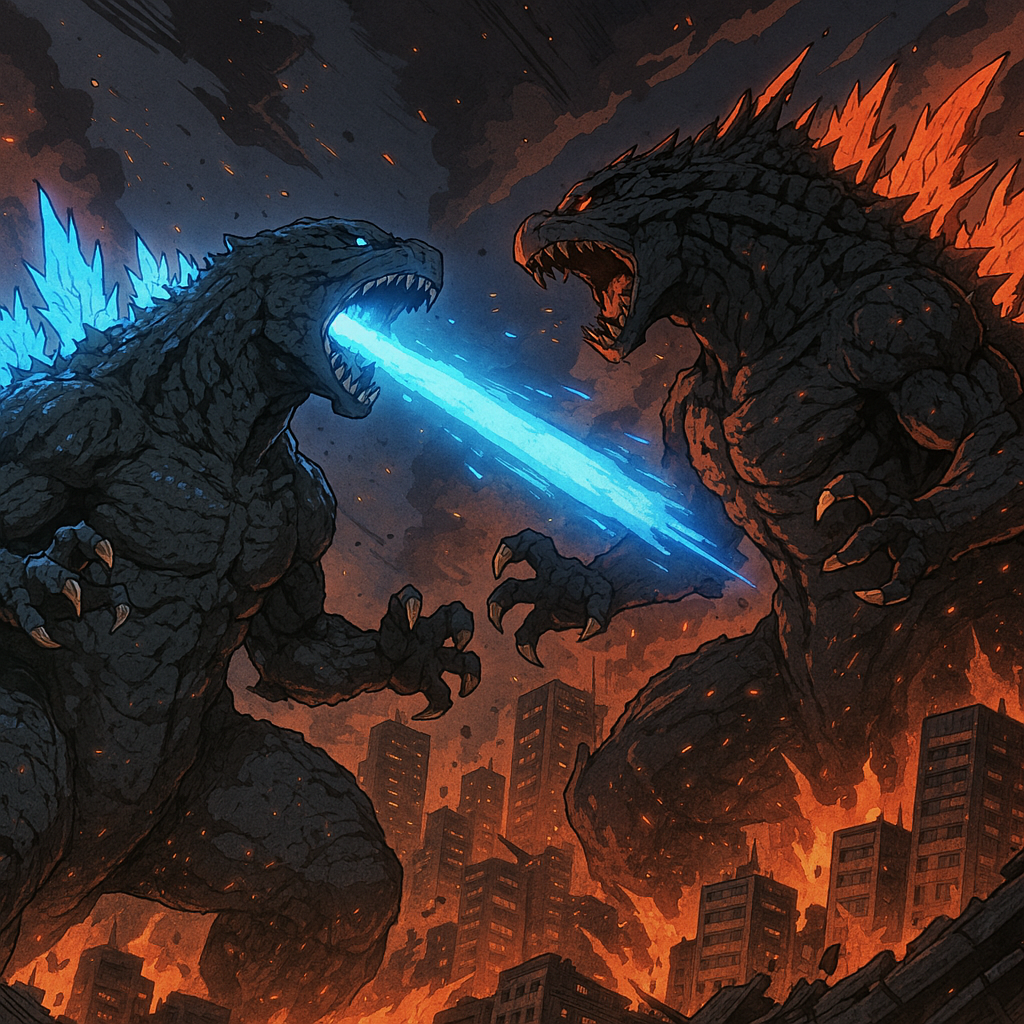
The cinematic legacy of Godzilla, a creature born from the atomic anxieties of the post-World War II era, has spanned over seven decades, evolving from a somber metaphor for nuclear devastation into a global pop-culture phenomenon. Since its debut in 1954, the franchise has traversed multiple distinct eras—Showa, Heisei, Millennium, Reiwa, and the American MonsterVerse—each offering a unique interpretation of the “King of the Monsters”. Whether portrayed as a vengeful deity, a tragic anti-hero, or a guardian of the natural world, Godzilla remains an enduring symbol of humanity’s complicated relationship with science and nature. This analysis explores the definitive ranking of the top ten entries in the series, evaluating them based on narrative depth, technical innovation, and historical impact.
The Evolution of the Kaiju: Historical Context and Eras
The journey of Godzilla is categorized into distinct chronological periods, each reflecting the zeitgeist of its time. The Showa era (1954–1975) established the foundation, moving from dark nuclear horror to colorful superhero-style action. The Heisei era (1984–1995) focused on biological continuity and a more menacing, consistent design for the monster. The Millennium era (1999–2004) functioned as an anthology of standalone “what-if” scenarios, while the Reiwa era (2016–present) has seen a return to high-concept prestige filmmaking and social commentary. Simultaneously, the American MonsterVerse (2014–present) has focused on big-budget spectacles and a shared cinematic universe.
10. Godzilla vs. King Ghidorah (1991)

Ranking at number ten is the ambitious Godzilla vs. King Ghidorah, a film that epitomizes the high-concept science fiction of the Heisei era. The narrative involves visitors from the 23rd century, known as Futurians, who travel back to 1944 to prevent Godzilla’s creation. This leads to the accidental creation of King Ghidorah, necessitating a modern-day showdown that includes the debut of Mecha-King Ghidorah, a cyborg version of the monster.
Critics have noted that while the time-travel mechanics are often described as convoluted, the film provides rare emotional weight by exploring the “Godzillasaurus” on Lagos Island and its relationship with the soldiers who would eventually see it become a monster. The film is celebrated for its impressive practical effects and its willingness to engage with Japan’s wartime past, even if the execution is occasionally campy. It remains a hallmark of the 1990s era for its high energy and iconic monster redesigns.
9. Godzilla vs. Biollante (1989)

Widely considered one of the most underrated gems of the franchise, Godzilla vs. Biollante stands out for its superior special effects and its deeply tragic story. The narrative explores the intersection of genetic engineering and human grief, as a scientist combines the DNA of his deceased daughter with that of a rose and Godzilla himself. The resulting creature, Biollante, is one of the most unique and visually stunning monsters in kaiju history, transitioning from a giant floral form into a terrifying, crocodile-like beast.
The technical craftsmanship, particularly the animatronics used for Biollante, remains a benchmark for the series, with many critics describing the monster as one of the most impressively executed in the franchise. The film also introduces the recurring character Miki Saegusa, a psychic whose connection to Godzilla would span the remainder of the Heisei era. By posing philosophical questions about humanity’s attempts to manipulate life, the film offers more than just monster action, engaging the audience on an emotional and technical level.
8. Godzilla, Mothra and King Ghidorah

Commonly referred to as GMK, this entry from the Millennium era is a complete reimagining of the character. Godzilla is portrayed not as a biological anomaly, but as a supernatural vessel for the vengeful spirits of those who died during the Pacific War. This version of the monster is arguably the most malevolent, featuring soulless white eyes and a ruthless fighting style.
In a fascinating subversion of tropes, the typically villainous King Ghidorah is cast as a heroic guardian of Japan alongside Mothra and Baragon. The film is lauded for its high-energy action and its ability to make Godzilla feel genuinely terrifying once again. This shift from science fiction to spiritual horror provided a fresh perspective on the kaiju genre, making it a standout entry in the anthology-style Millennium era.
7. Mothra vs. Godzilla (1964)

As one of the crowning achievements of the Showa era, Mothra vs. Godzilla is a masterclass in kaiju storytelling. The film pits the benevolent deity Mothra against a particularly aggressive Godzilla, framing the conflict around themes of corporate greed and environmental protection. The introduction of the Shobijin—the tiny twin fairies who act as Mothra’s spokespeople—added a layer of fantasy and charm that became a staple of the series.
The battle between the adult Mothra and Godzilla is legendary, but the sequence involving the two Mothra larvae teaming up to defeat the King of the Monsters remains one of the most iconic moments in cinematic history. This film represents the peak of director Ishiro Honda and special effects wizard Eiji Tsuburaya’s collaboration during the 1960s, establishing a classic conflict that has remained a staple of the series.
6. Ghidorah, the Three-Headed Monster (1964)

Released in the same year as Mothra vs. Godzilla, this film is a pivotal turning point for the franchise. It marks the debut of King Ghidorah, the extraterrestrial “King of Terror,” and serves as the first time Godzilla transitions from a villain into an unlikely protector of Earth. The narrative follows a princess possessed by an alien spirit who warns of impending doom as Godzilla and Rodan emerge to wreak havoc.
The “monster summit,” where the Mothra larva attempts to convince Godzilla and Rodan to stop fighting each other and team up against Ghidorah, is considered a watershed moment for the franchise. This anthropomorphic shift reshaped the series for the next decade, steering it toward the superhero-like adventures of the later Showa era. Despite the lighter tone, the scale of Ghidorah’s destruction and the sheer charisma of the monster cast make this a top-tier entry.
5. Godzilla vs. Destoroyah (1995)

Ranked at number five, Godzilla vs. Destoroyah is the emotional climax of the Heisei era. The film centers on a terrifying concept: Godzilla is undergoing a nuclear meltdown, his body glowing red and his internal temperature reaching critical levels. Standing in his way is Destoroyah, a demonic creature born from the Oxygen Destroyer, the very weapon that killed the original 1954 Godzilla.
This film is a favorite among enthusiasts for its high stakes and its poignant ending, which features the death of Godzilla and the ascension of Godzilla Junior. The technical execution of “Burning Godzilla” remains one of the most striking visual designs in the entire series, and the connection to the 1954 original brings the franchise full circle. The emotional weight of the finale, accompanied by Akira Ifukube’s “Requiem” score, is often cited as one of the most heart-wrenching sequences in film history.
4. Godzilla (2014)

The film that birthed the MonsterVerse and successfully revitalized global interest in the character, Gareth Edwards’ Godzilla (2014) is a masterclass in scale and cinematography. The “slow burn” approach served to build immense dread and awe, treating the monsters as god-like forces of nature. Iconic moments like the HALO jump and the first reveal of Godzilla in Hawaii highlighted the film’s commitment to a grounded, human perspective.
While the human drama was criticized by some as dull, the portrayal of the “MUTOs” and Godzilla’s role as a balancing force for nature set the stage for the massive success of subsequent MonsterVerse films. It remains a visually stunning entry that proved Godzilla could thrive in a modern Hollywood landscape with a high-budget treatment.
3. Shin Godzilla (2016)

Returning to the franchise’s roots as a source of terror, Shin Godzilla was a revolutionary entry in the Reiwa era. Directed by Hideaki Anno and Shinji Higuchi, the film is a biting satire of Japanese bureaucracy, inspired by the government’s response to the 2011 Fukushima disaster. Godzilla is portrayed as a grotesque, rapidly evolving organism that becomes a literal “god” of destruction.
The scenes of Godzilla’s atomic breath—turning Tokyo into a sea of purple flame—are among the most haunting and visually spectacular in cinema history. By making the “protagonist” a collective of scientists and politicians rather than a single action hero, Shin Godzilla provided a mature, high-concept take on the genre that resonated deeply with audiences worldwide.
2. Godzilla (1954)

The original Godzilla remains a haunting and essential piece of world cinema. Released only nine years after the atomic bombings of Hiroshima and Nagasaki, the film is a direct manifestation of nuclear trauma. The black-and-white cinematography creates a somber, documentary-like feel as Godzilla levels a defenseless Tokyo.
The tragic story of Dr. Serizawa and his invention, the Oxygen Destroyer, adds a layer of moral complexity that many later sequels lacked. Serizawa’s sacrifice to ensure his weapon can never be used again is the emotional heart of the film. The film’s message about the dangers of unchecked scientific progress remains as relevant today as it was in 1954, making it a profound cultural landmark.
1. Godzilla Minus One (2023)

Taking the top spot is the Academy Award-winning Godzilla Minus One. Set in the immediate aftermath of World War II, the story follows a failed kamikaze pilot seeking redemption in a Japan reduced to “zero” by the war. The film’s success stems from its ability to blend gut-wrenching human drama with terrifying, high-stakes monster action.
The “Minus One” version of Godzilla is a primal force of nature, possessing a devastating atomic breath that creates a literal nuclear blast. By focusing on survivor’s guilt and the power of communal resilience, director Takashi Yamazaki created a masterpiece that transcends the genre. Its win for Best Visual Effects at the 96th Academy Awards further solidified its place as the definitive modern Godzilla experience.
The Future of the Franchise: Godzilla Minus Zero (2026)
As of March 2026, the Godzilla brand is at its strongest point in history. The highly anticipated direct sequel, officially titled Godzilla Minus Zero, is scheduled for release in Japan on November 3, 2026, followed by a North American release on November 6. Takashi Yamazaki returns as director, with rumors suggesting the film may feature a reimagined version of Hedorah or a more menacing take on Godzilla himself.
Fans have noted that the “Minus Zero” title remains mysterious, possibly implying that things will get even worse for Japan than in the previous film. Poster analysis has led to theories involving toxic smog or gravity beams, hinting at the involvement of classic villains like Hedorah or King Ghidorah. Beyond the screen, 2026 sees Godzilla expanding into Formula 1 collaborations and complex comic book narratives that include the death and resurrection of the monster.
The technical brilliance of the franchise, from the early days of suitmation to the Oscar-winning CGI of the Reiwa era, continues to push the boundaries of what is possible in the kaiju genre. As the King of the Monsters approaches his 72nd anniversary, his ability to reflect societal fears and offer exhilarating entertainment remains unmatched in cinema history.